Tretinoin is a prescription retinoid used for decades to treat acne and to improve fine lines, uneven tone and rough texture from sun exposure. Your provider chooses the strength and formula.*
You're only charged for medication if a provider prescribes it.*
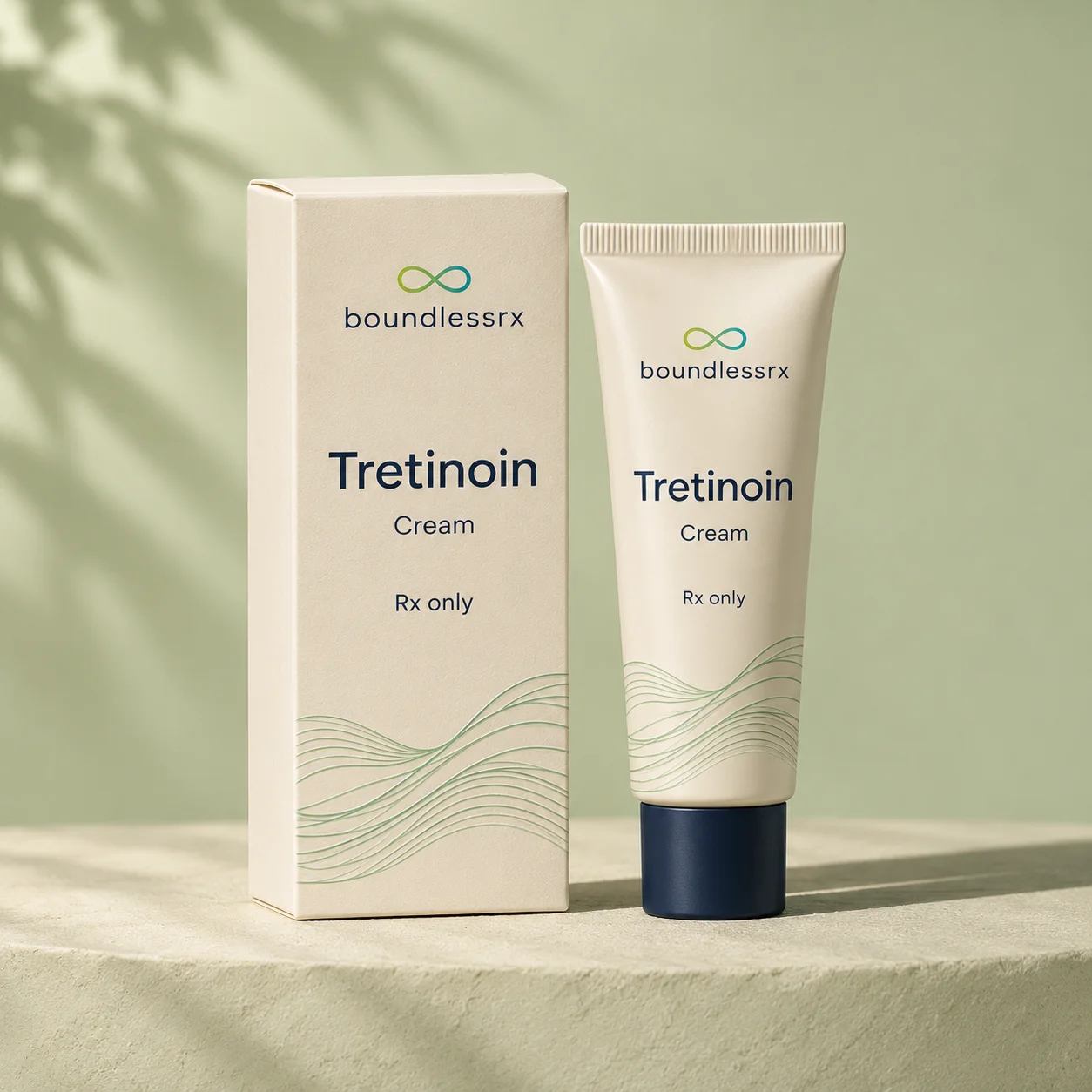
Most people start at a lower strength a few nights a week, then step up as their skin adjusts.
Your provider sets the tretinoin strength and may add supporting ingredients, such as niacinamide, when appropriate.
Share progress photos with your provider, who can adjust your strength or routine as your skin changes.
*Brand-name tretinoin products are FDA-approved for acne and, at certain strengths, for fine wrinkles, mottled discoloration and roughness from sun damage, as part of a skin-care routine that includes sun protection. Custom compounded formulas are not FDA-approved. Results vary, and changes typically take several months of consistent use.
Answer questions about your goals and health history.
A licensed provider reviews your answers, usually within 1 to 2 business days.
If appropriate, your prescription is prepared and shipped to you.*
Message your care team and check in as your plan evolves.
In the first few weeks, dryness, peeling, redness and sometimes temporary breakouts are common while your skin adjusts. Starting slowly and moisturizing helps. Your care team can adjust your plan if it's too much.
No. Tretinoin should not be used if you are pregnant, trying to become pregnant, or breastfeeding. Tell your provider if any of these apply.
Yes. Tretinoin makes skin more sensitive to the sun. Use a broad-spectrum SPF 30 or higher every day and limit sun exposure.
Usually, with some care. Avoid other strong exfoliants (like AHAs, BHAs or benzoyl peroxide) at the same time unless your provider says otherwise.
This is not a complete list. Talk with your provider about the benefits and risks of any treatment. Report side effects to your care team, or to the FDA at 1-800-FDA-1088.
A short online intake, reviewed by a licensed provider.
Get Started →